



You need a concrete mixer on site in a month. Do you call a rental company or pull the trigger on a purchase? It’s a question that comes up at every stage of a contracting business. The right answer isn’t the same for everyone, but the wrong answer can quietly drain your budget over time.
Below, we break down the pros and cons of each path so you can make a confident decision. Whether you pour concrete once a quarter or every week, the goal is simple – help you spend smarter and work better.
When Renting a Concrete Mixer Makes Sense
For certain situations, a concrete mixer rental is the practical choice.
One-Off or Short-Term Projects
If you’re handling a single residential pour, a small repair job, or a seasonal project, renting a concrete mixer keeps things simple. You pick it up, use it, and return it. There’s no long-term commitment and no storage to worry about once the project wraps.
For contractors who only need a mixer a handful of times per year, equipment rental avoids tying up capital in something that sits idle most of the time.
Testing Before You Invest
Renting also gives you the chance to test different configurations before you commit to a purchase. You can try different drum capacities, hopper capacities, or chute heights to figure out what actually works best for your crew and your most common pours. It’s a low-risk way to learn what you need on the construction site before spending thousands.
Budget Constraints on a Single Job
Sometimes the project requires a mixer, but upfront cash is tight. A tool rental lets you get the job done without a large capital outlay. For new contractors still building their client base, this flexibility matters.
The Hidden Costs of Concrete Mixer Rentals
Renting sounds affordable on paper. But when you start adding up the real numbers, the picture changes fast.
Rental Fees Add Up Quickly
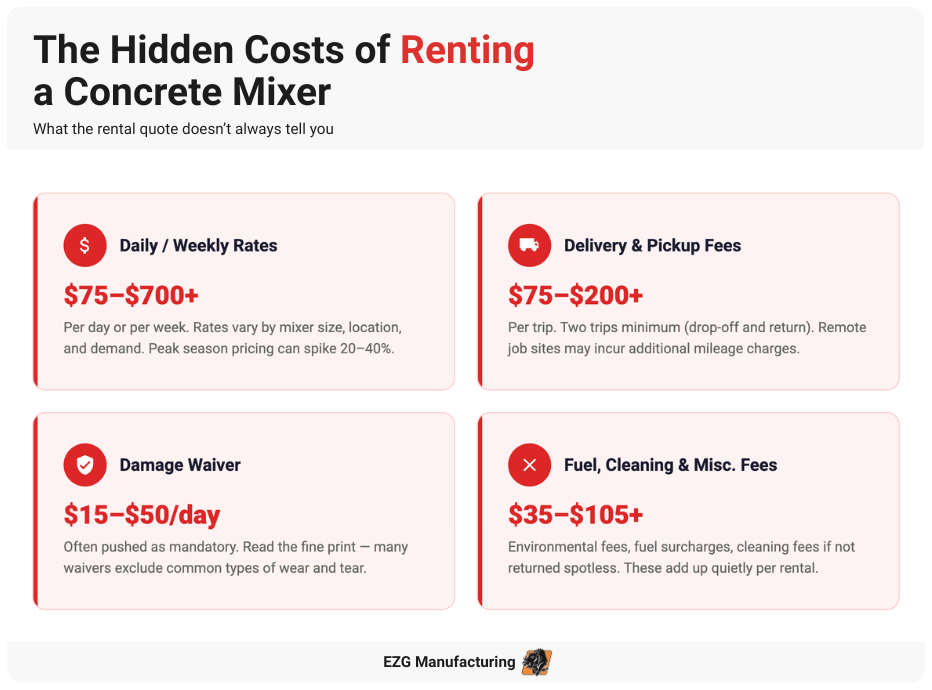
Most rental companies charge by the day, week, or month, often with additional fees that vary by provider and aren’t always obvious upfront. Pricing varies by region, mixer size, and availability. The ranges below reflect typical U.S. rental rates contractors encounter, but actual pricing may be higher or lower depending on your market and rental provider.
| Cost Category | Typical Range |
|---|---|
| Daily rental rate | $75–$250+ |
| Weekly rental rate | $250–$700+ |
| Monthly rental rate | $800–$2,000+ |
| Damage waiver fee | $15–$50/day |
| Delivery and pickup fee | $75–$200+ per trip |
| Fuel/cleaning surcharge | $25–$75 |
| Environmental fee | $10–$30 |
Now multiply those costs across several projects per year. A contractor who rents a mixer for even 8–10 weeks annually could easily spend an estimated $4,000–$6,000 or more, depending on the rates and add-on fees. Those prices keep climbing, and the equipment goes back to the rental yard every time.
What You Don’t Control
When you rent, you’re at the mercy of the rental company. That means dealing with:
- Availability gaps. The mixer you need might not be in stock when your project timeline demands it. Your rental needs don’t always align with inventory.
- Inconsistent equipment quality. You have no say in how that machine was maintained. One rental might perform fine. The next might give you problems from the first pour.
- No guarantee of consistent results. Different units, different wear levels, and different setups mean your crew has to adjust every time.
- Delivery delays. Waiting on a concrete tool rental to show up can stall your entire schedule.
The Damage Waiver Trap
Most rental agreements push you toward a damage waiver. It sounds like peace of mind, but read the fine print. These waivers often exclude certain types of damage, still hold you responsible for cleaning, and come with a per-day fee that adds up over the course of a project. Ask questions before you sign. Not every waiver covers what you’d expect.
The Case for Buying a Concrete Mixer
For contractors who mix on a regular basis, ownership almost always wins over time. Here’s why.
Long-Term Cost Savings
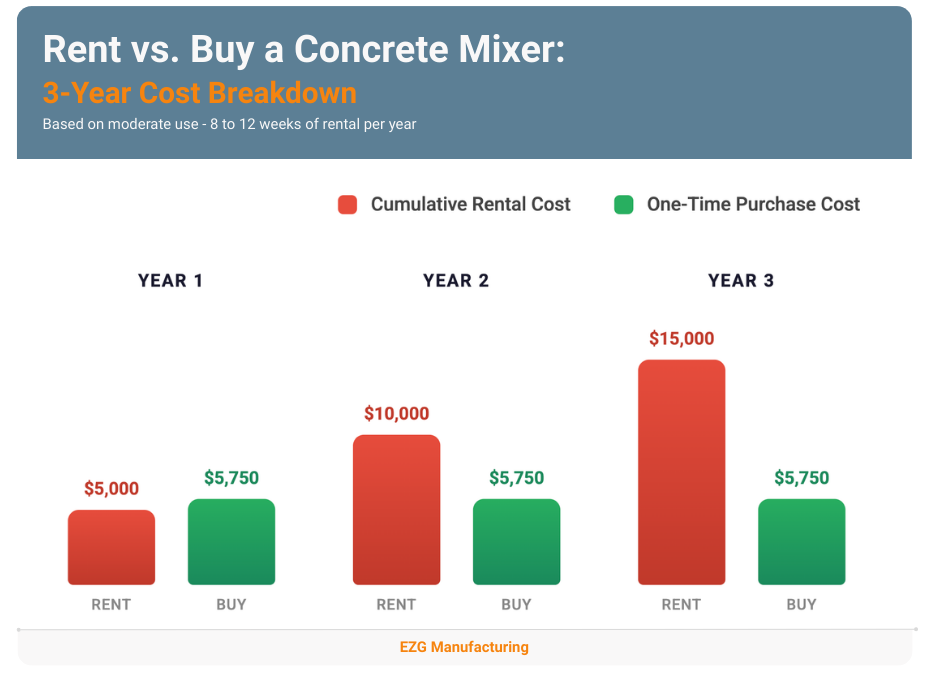
Let’s look at a side-by-side comparison. (Pricing examples are provided for comparison purposes only and should be confirmed with local rental providers.)
| Time Period | Rental Cost (est.) | Purchase Cost (one-time) |
|---|---|---|
| Year 1 | $4,000–$6,000 | $3,500–$8,000 |
| Year 3 | $12,000–$18,000 | $3,500–$8,000 |
| Year 5 | $20,000–$30,000 | $3,500–$8,000 |
Estimates based on moderate use (8–12 weeks/year of rental). Purchase price varies by model and capacity.
The break-even point often hits within the first year. After that, every pour is money in your pocket.
EZG Manufacturing founder Damian Lang puts it this way: only about 30% of the cost of a piece of equipment is what you pay upfront. The other 70% comes during the life of that product. When you buy equipment built to last, that 70% shrinks dramatically.
Reliability and Consistency on Every Job
Owning your mixer means owning your schedule. No waiting on delivery windows. No scrambling when the rental yard is out of stock. Your crew uses the same machine on every project, and that familiarity leads to consistent results, faster setups, and fewer mistakes.
There’s real value in your team knowing a piece of equipment inside and out. They learn the quirks, the sweet spots, and the fastest way to get the mix right. That kind of efficiency doesn’t happen with a different rental unit every few weeks.
Built to Last – Not Built to Rent
Rental equipment is built to survive being passed around. Purchased equipment (at least the good stuff) is built to perform for the people who own it.
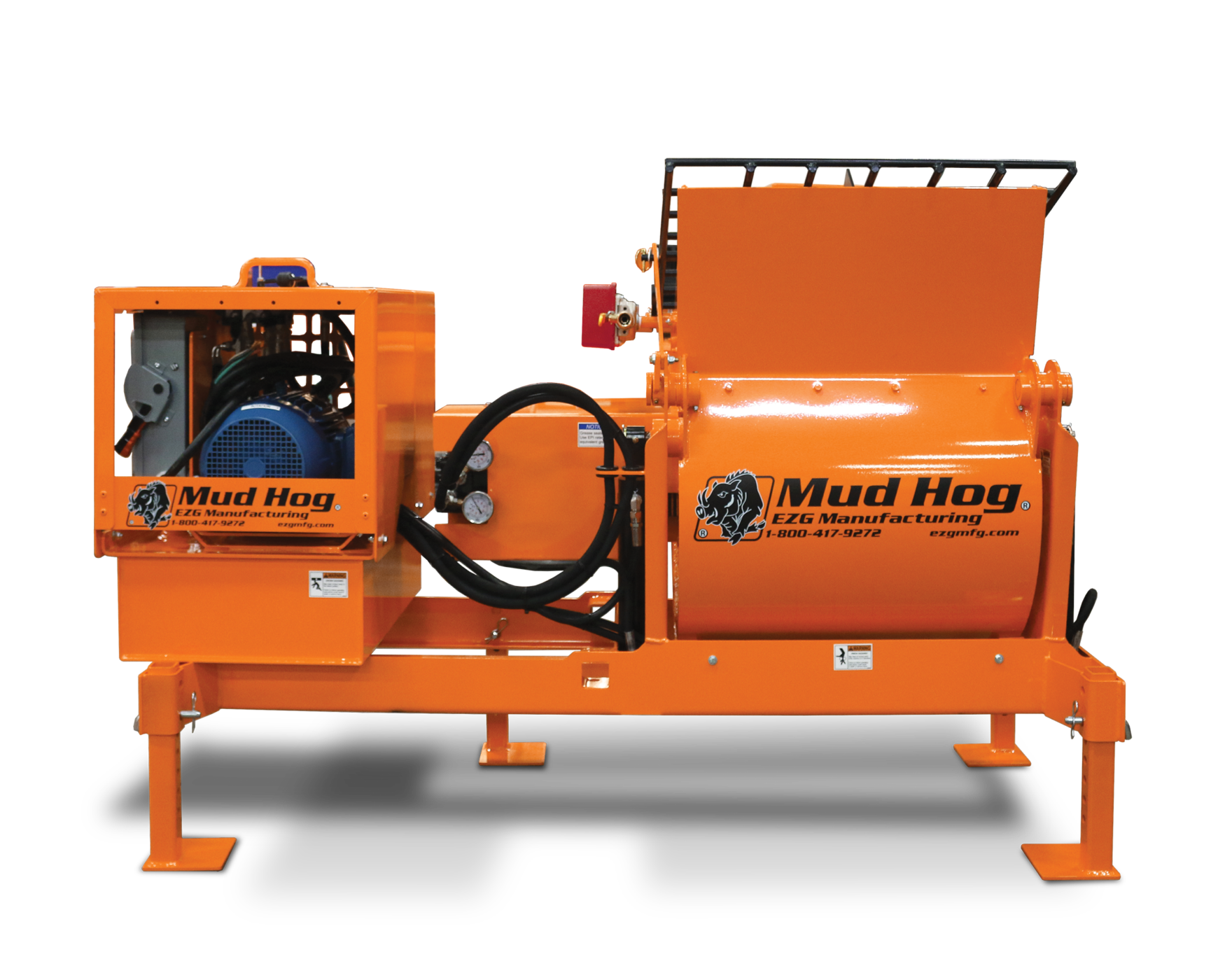
At EZG Manufacturing, that philosophy drives everything. When EZG’s engineers designed their mixer drum, Damian told them to find the biggest guy on the floor, hand him a sledgehammer, and beat on the drum until he couldn’t put a dent in it. When they called back and said the answer was ⅜” steel, that became the standard.
That’s the kind of build quality you get when you invest in your own equipment instead of renting someone else’s.
→ Explore EZG’s Hydraulic Mixer Lineup
A Mixer That Does More Than One Job
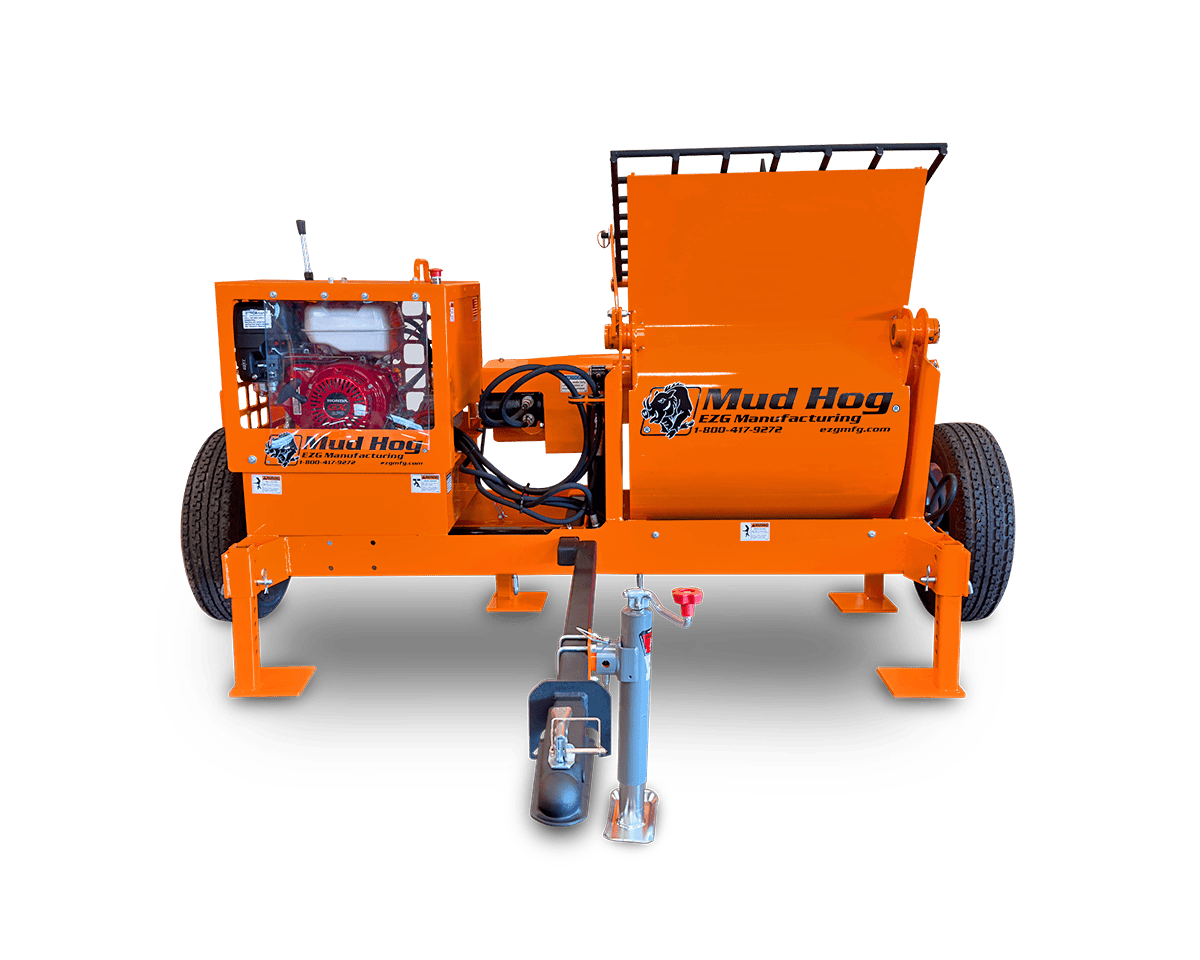
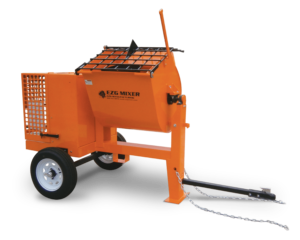
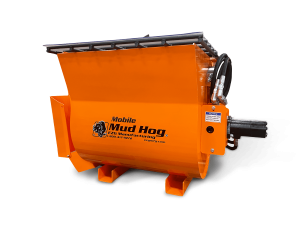
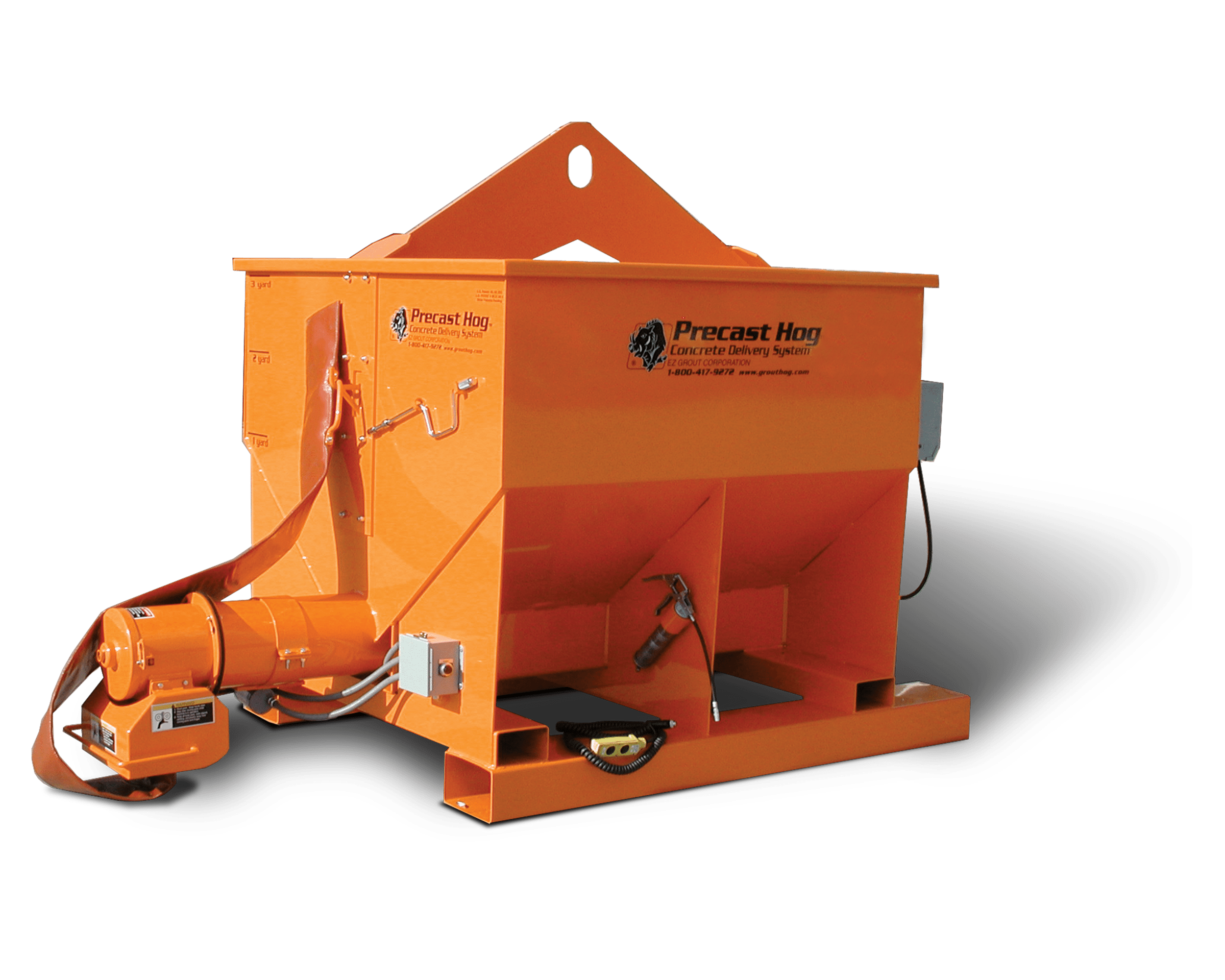
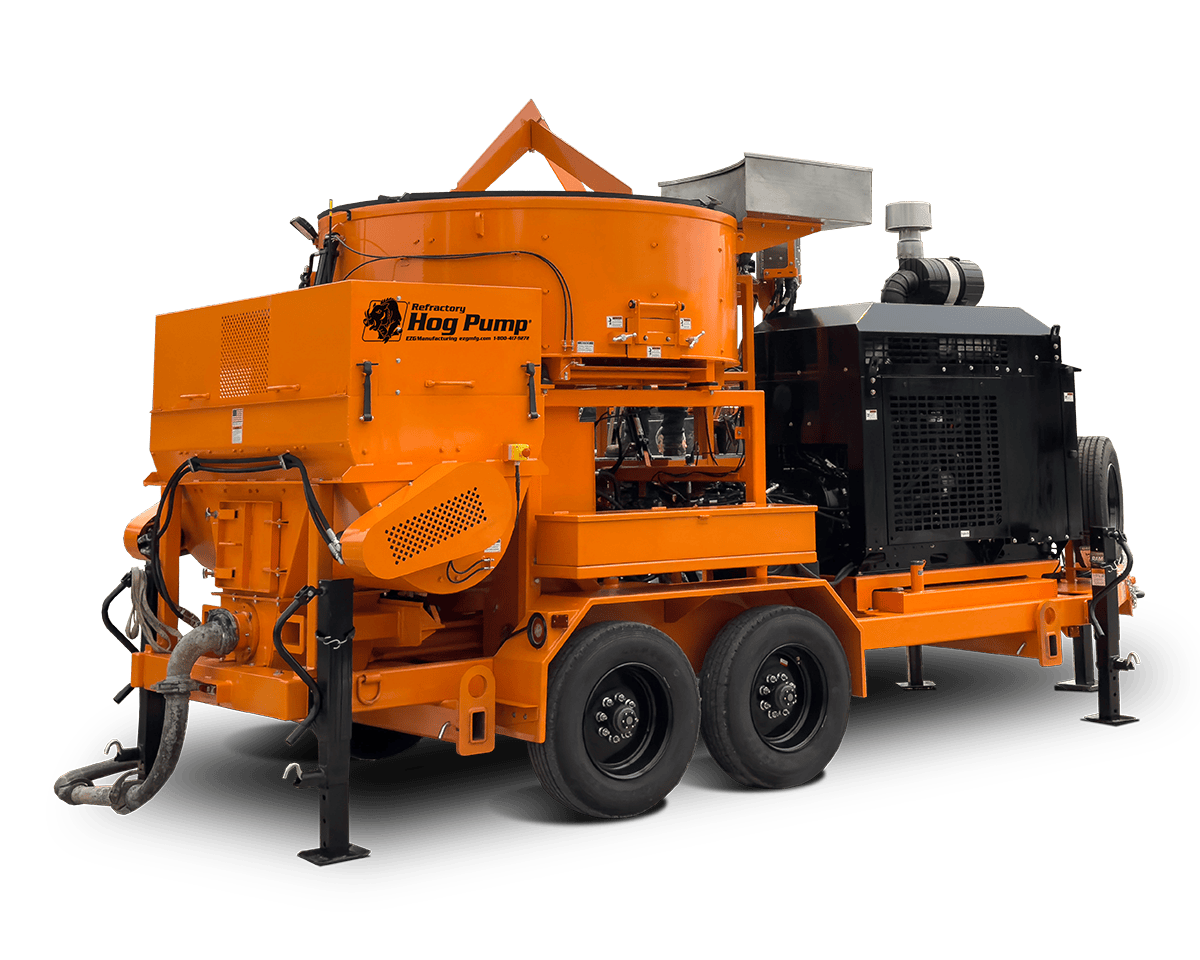
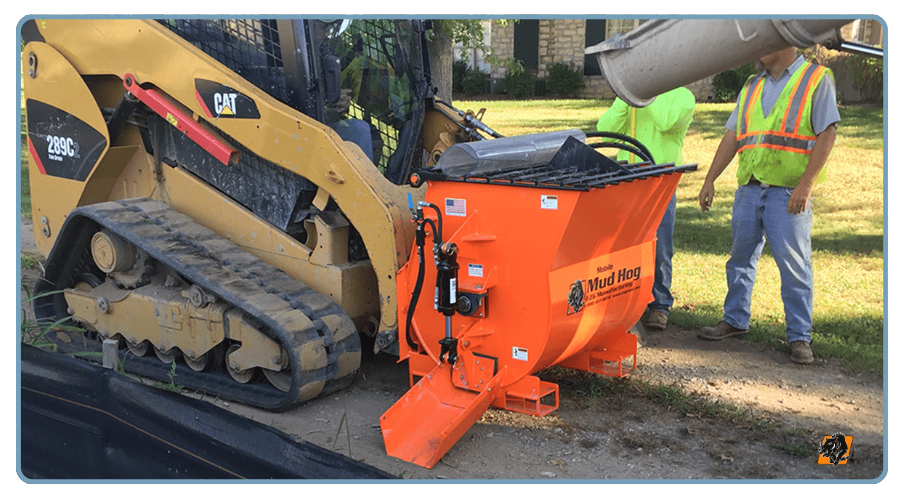
One of the biggest advantages of owning is choosing a multi-use mixer. Instead of renting a separate unit for every type of mix, a single quality mixer can handle concrete, mortar, grout, and refractory materials.
A portable concrete mixer from EZG gives your crew the flexibility to move between job sites without coordinating rentals or scheduling deliveries. One machine, many applications.
Financing and Payment Options for Concrete Mixers
One of the biggest reasons contractors stick with rentals is the assumption that buying means paying the full price upfront. That’s not always the case. Several financing paths can make ownership more accessible.
Equipment Loans
Many lenders offer loans specifically designed for construction equipment. These typically come with fixed monthly payments spread over 2–5 years, and the mixer itself serves as collateral. For contractors with steady project volume, the monthly payment is often comparable to (or less than) what they’d spend on rentals during the same period.
Lease-to-Own Programs
Leasing gives you access to the equipment now with the option to purchase at the end of the lease term. It’s a middle ground between renting and buying that lets you use the mixer on your own terms while building toward ownership.
Manufacturer Programs
Some manufacturers offer direct financing or payment plans. It’s worth asking about, especially when you’re buying from a company like EZG Manufacturing that works directly with contractors and understands the financial realities of running a crew.
Questions to Ask Before You Decide
Before you commit to renting or buying, take an honest look at your operation:
- How many times per month or per year does your crew need a mixer?
- Are you ordering a concrete truck for large pours, or do you mix on site?
- What drum capacity and hopper capacity do your typical projects demand?
- Do your crews move between multiple construction sites regularly?
- What’s your total annual spend on concrete mixer rental, mortar mixer rental, and other concrete tool rentals?
- Could that same rental budget fund equipment ownership instead?
If you’re renting more than a few times per year, the math almost always favors buying.
What to Look for When Buying a Concrete Mixer
Here’s what separates a smart investment from a regret.
Build Quality and Materials
Look at steel thickness, weld quality, and where the components are sourced. Thin-gauge drums and lightweight frames might save money upfront, but they cost you in repairs and replacements. Equipment built with heavy-gauge steel holds up to the demands of daily commercial use.
Drum Capacity and Chute Height
Match the mixer’s specs to your most common project types. Too small, and you’re running extra batches. Too large, and you’re hauling more machine than you need.
Manufacturer Reputation and Support
Buy from a company that stands behind its products. EZG Manufacturing offers a 100% satisfaction guarantee. If the equipment doesn’t meet your expectations, you get your money back. That kind of confidence comes from building equipment in the field, not just designing it in a lab.
EZG’s mixers are designed by people who’ve actually used them on real job sites. That hands-on experience shows up in every detail, from drum geometry to control placement.
Why Contractors Choose EZG Manufacturing
EZG Manufacturing was born out of frustration. Founder Damian Lang spent years working in the field with equipment that broke down, clogged up, and couldn’t keep pace with the work. So he started building his own.
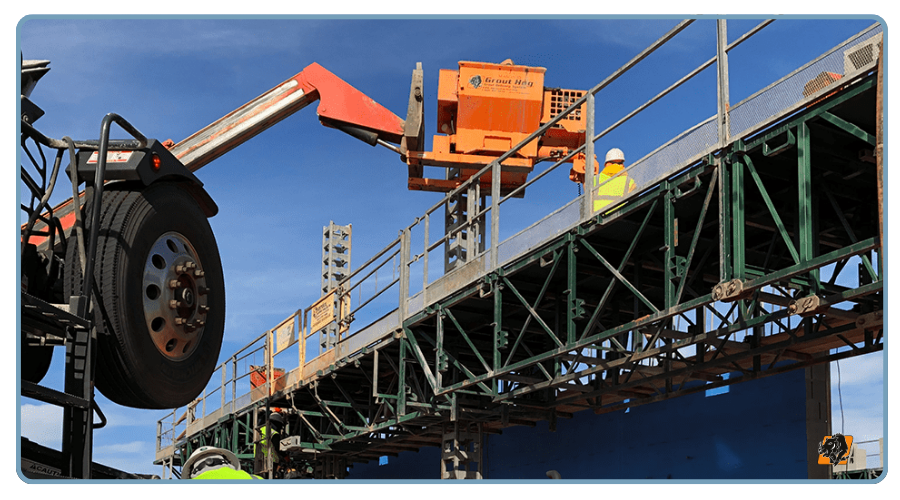
Since 1998, EZG has grown from a one-product operation into a full-scale manufacturer serving masonry, fencing, hardscape, precast, and construction communities across the country. Every product is American-made and built with direct input from the contractors who use them.
Damian’s philosophy is straightforward: listen to the people doing the work, build the best equipment possible, and never cut corners to save a few bucks on production.
If you have questions about which mixer is right for your operation, the EZG team is ready to help. Get in touch here or explore the full line of hydraulic mixers.